S.J. Shank
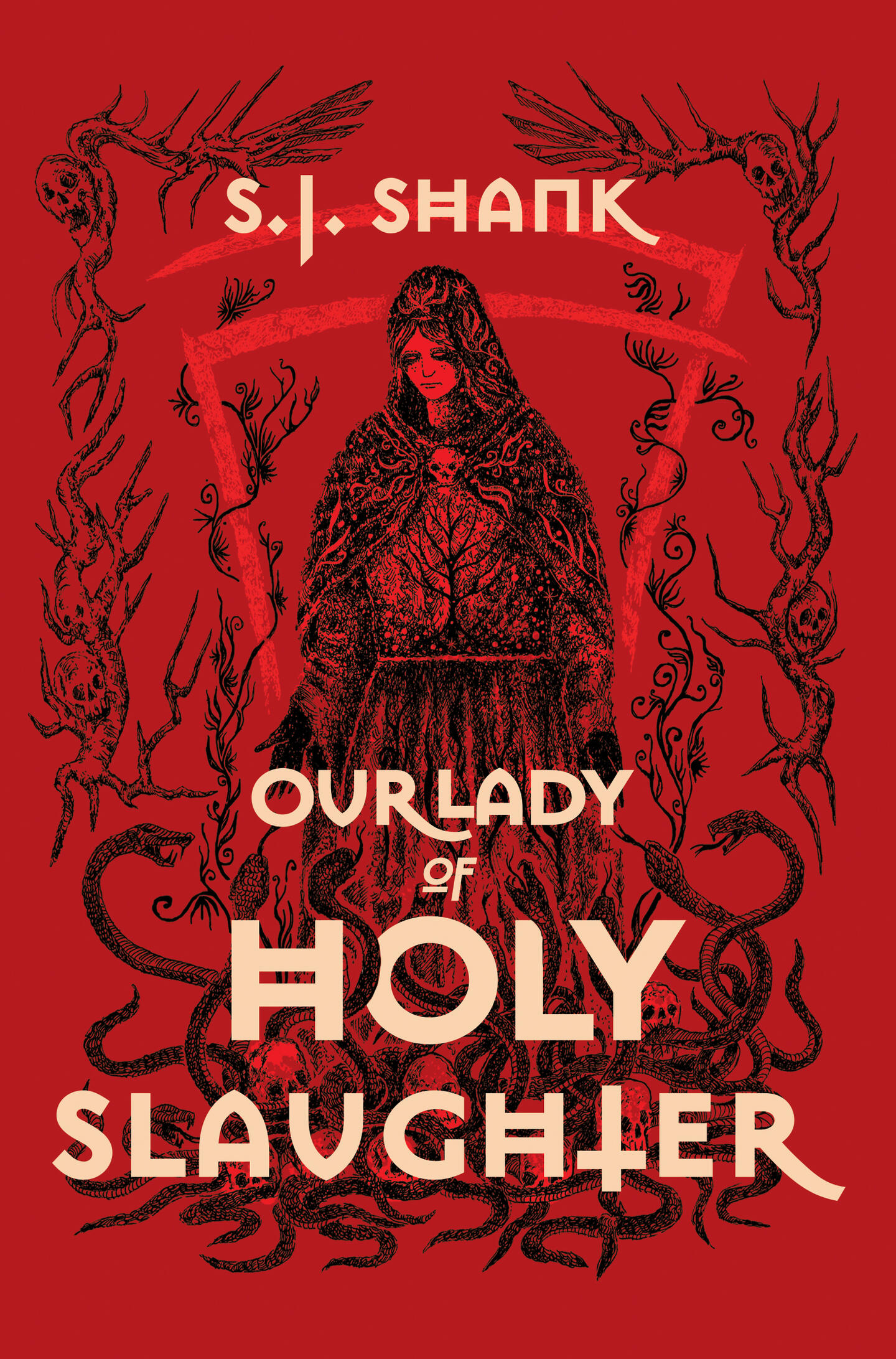
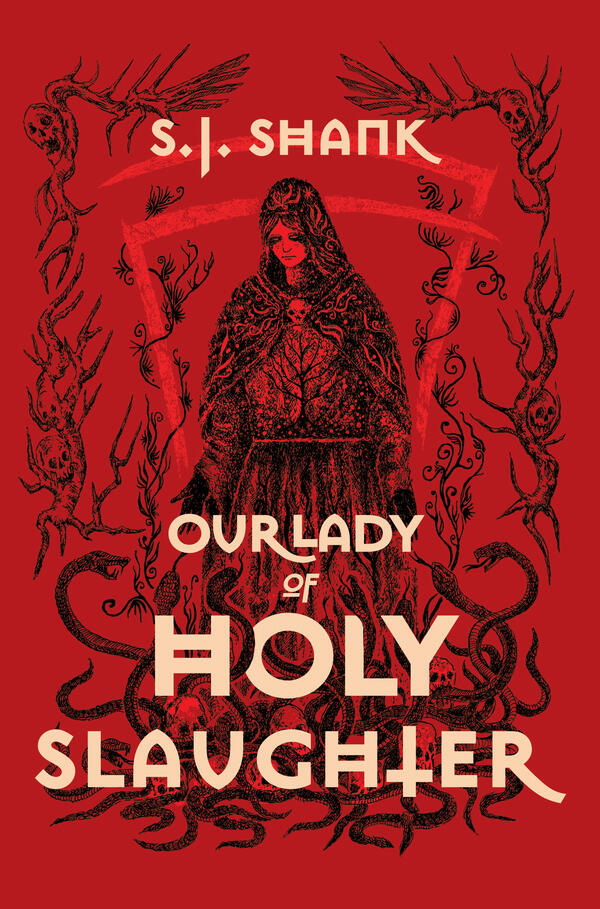
Our Lady of Holy Slaughter
For readers of Between Two Fires and Hellmouth, Our Lady of Holy Slaughter is a brutal medieval fantasy where desperate crusaders confront pagan folk horrors on the Baltic frontier.
About
S.J. Shank is a lover of dead languages and collapsed empires. His writing inhabits the grim borderlands between fantasy, horror and historical fiction. His books include Our Lady of Holy Slaughter, The Knave of Graves, and Mountain Fast.
Books

Mailing List
Subscribe to the mailing list and receive a free copy of Rare Specimen and Other Stories.
When one has strayed this far,
few paths lead to salvation.
Livonia, 1236.The crusading Sword Brothers marched south from Riga expecting glorious victory. They found catastrophic defeat.Now, far from their stronghold, a handful of survivors seeks refuge in the swamp, relying as much on their prayers as their wiles to evade the pagans who hunt them—and the devils said to rule the wastes.What, then, to make of the mysterious veiled woman who appears beneath the moonlight? Has the apparition come to deliver them from evil … or to their doom?
Carthago Nova Press, 2026
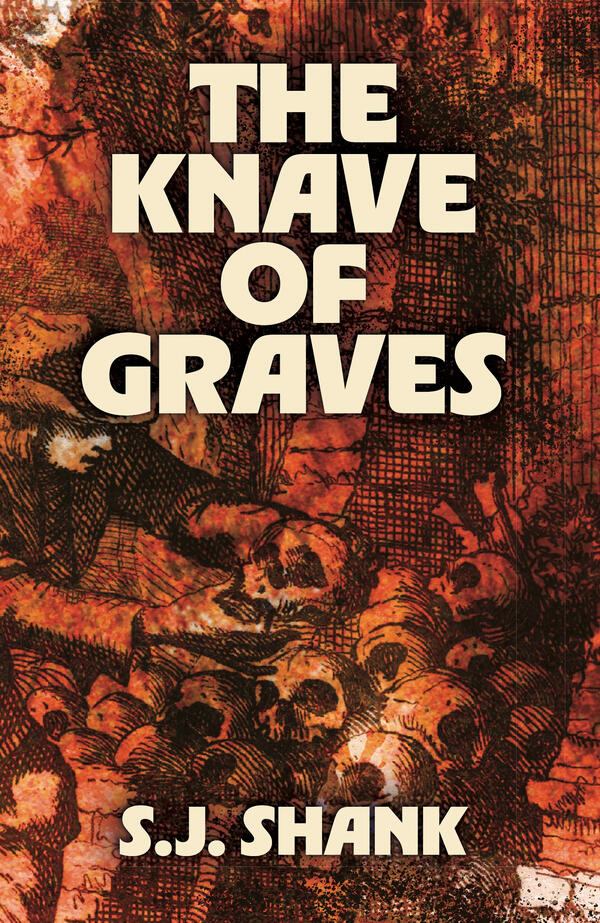
The dead sleep safely in Jeppo's graveyard. For the most part.
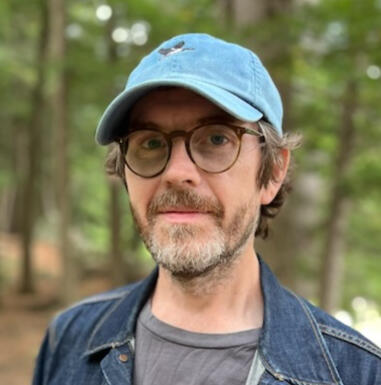
Jeppo loathes his hometown and he can scarcely tolerate the townsfolk. Mostly, he despises his life as a gravedigger. He went to the Academy in the south, after all. He was never meant to take up his father’s shovel.When a wicked sorcerer arrives at his gate demanding the bones of the local saint, Jeppo has no objection in principle. But he fears the wrath of the night hag, to whom he has been selling corpses for years.Jeppo must choose the lesser of two evils, and do so quickly. The spiraling feud threatens to spill innocent blood … and worse still, his darkest secrets.
Carthago Nova Press, 2025

The fortress was haunted.
He brought his own ghost.
Hungary, 1468.At Kuszkol, the old-timers say, shadows walk and men go mad. But sixty years after the remote mountain fortress was first abandoned, it is attracting soldiers once again.The bishop’s messenger András carries a letter for the new commander. On his party’s northward journey, he downplays the old tales. Yet he cannot explain why the castle’s beacon should burn the night before their arrival. Nor why, once they arrive, the garrison is missing. Nor can he explain the mysterious charcoal figures they find etched on the walls.By the time they settle down for their first night at Kuszkol, András faces an even more pressing question—why is he speaking in his dead wife’s voice?
Carthago Nova Press, 2024
Eight tales of weal and woe.
An oracle whose gift for prophecy is infectious …A watchwoman who guards the mouth of a wormhole …A monster hunter who worships her quarry …A mage whose sorceries are trapped by stitched lips …Welcome to the dread futures and grim antiquities of S.J. Shank. Together, these eight stories weave a feverish tapestry of misplaced loyalties, tainted victories, and survival by the leanest of margins.
Carthago Nova Press, 2023
Review Links
If you enjoyed one of my books, please consider leaving a review using the following links.Reviews make the book world go round, and every one makes a big difference. Thank you!


Our Lady of Holy Slaughter
Chapter 1
Beyond the clouds of gnats and the mist that hung in ragged veils, a trumpet sounded. Somewhere past the trees dimly viewed across the distance, and past the fetid water that enclosed their islet, someone called.Another survivor.The men held their breaths, waiting for the trumpet to sound again.Gaidis sought the eyes of his fellow infantryman, Ilo, who squatted in the reeds next to him. The only other man of his rank to have lived through the trial of the past days. The only other native of these northern lands that the German conquerors called Terra Mariana. A few of those German knights had survived too, but Gaidis considered only Ilo a companion. His lowly peer in this cruel game of endless running, hiding and lying still in silent prayer as the bloodthirsty tribesmen searched. The savages—Gaidis’s distant kin—who’d routed them in battle, who’d forced the ranks of spearmen to break and their masters to abandon their mounts as they all dashed into the mire. The heathens now scoured these backwaters, sometimes venturing so close as they hooted and taunted in broken German—promising the rope, the ax, the fire—that Gaidis had to bite his knuckle to keep his teeth from chattering.The trumpet was a crusader’s instrument. What did it mean?Ilo nodded. All is well, the gesture said. He squeezed Gaidis’s arm to reassure him.Gaidis nodded back. All is well. The trumpet meant that more of the defeated lived. Out there, somewhere, another of their own.Gaidis continued to watch Ilo even as his comrade’s gaze drifted to the mud between his ruined boots. His friend was growing weaker. His color in the light of this wan afternoon was appalling. His quilted jacket was as sodden and as filthy as Gaidis’s own, but Ilo’s also bore a more sinister stain.Ilo insisted the blood was a keepsake from the pagan he’d run through with his spear. But Gaidis knew that wasn’t the whole story. Ilo’s strength was flagging. He panted whenever they ran more than a few paces. Every time he shifted his weight, he winced in pain.Yet Ilo refused to acknowledge his wound. After the rout, he had only pointed at the blood on his jacket and said it was this stain that tormented him, for it contradicted God’s commandment.Thou shalt not kill.Brother Johannes, having heard Ilo lament this sin earlier, had told him to rejoice. Johannes said that killing pagans was holy work. But then again, the knights of his order, the Livonian Brothers of the Sword, preached the gospel through war.Now, Gaidis glanced at the brothers for some sign. They sat rigidly, ears pricked like hounds. Three of the Sword Brothers had survived. In addition to Brother Johannes, there was Brother Lorenz, who regarded all creatures of this land—the knight’s native allies Ilo and Gaidis included—with disgust. There was, too, Brother Marquart, the oldest of the Sword Brothers, a veteran who’d warred across Terra Mariana for decades. He scarcely noticed that Ilo and Gaidis existed.The Germans exchanged their own glances. A more nuanced conversation passed between them. Questions. Calculations. Resolutions. Gaidis’s heart emptied when he understood the decision they were taking. They would seek the trumpeter.Besides Gaidis and Ilo and the three German knights, there was one last member of their band. The Italian fellow, Pandolfo. Another knight, though he’d taken no monastic vows as the Germans had. He wasn’t even a crusader, Gaidis understood, but rather an emissary from the Pope in Rome. Pandolfo had spent the past day squinting at Ilo and Gaidis the way he did their few possessions and the vegetation about him and even his fellow knights. As though trying to work out how he might use the material in front of him, to find a way to survive this fight he obviously didn’t consider his own.But Pandolfo wasn’t squinting now. He watched the Germans with the same alarm that Gaidis felt. He, too, could guess at the consensus that was taking shape.Pandolfo pointed in the direction from which the trumpet had echoed and whispered, “No.”No, they must not seek the trumpeter out. No, they must not go back from whence they’d come. Deeper into this hellish swamp.At a sign from Marquart, Johannes rose slowly so that he might see above the reeds. When he crouched again he nodded. There were no heathens near.“If one of our own calls,” Marquart said. “We must respond.”“I hear you, Brother. But what if it’s a trap?” Johannes asked.“You’re suggesting the heathens might have captured our horn?” Marquart frowned and rubbed his chin. “Hmm.”“No go,” Pandolfo said. “No.”The Sword Brothers ignored him.Gaidis wondered if there was any use adding his voice to Pandolfo’s. He’d noticed the Sword Brothers often pretended not to hear the Italian. Pandolfo spoke little more German than the heathen Semigallians who now hunted them, but he was still a papal knight. If the brothers so easily dismissed his concerns, they would never heed any argument Gaidis put forth.And yet, the knights sometimes listened to Ilo, who’d served on two earlier campaigns in the north. Or at least Brother Johannes sometimes did. “Ilo,” Gaidis said, hoping his friend would speak up for good sense. Pandolfo was right. They must not venture back into the heart of the swamp, not now that the ground was growing somewhat drier.But Ilo didn’t respond. Instead, his friend unexpectedly set his rump down in the mud, unable to squat any longer. Ilo had closed his eyes too. A droplet of sweat rolled down his nose—which should be impossible. Ilo was as soaked through as Gaidis, which meant he must be just as chilled. But when Gaidis took hold of his friend’s hand, he found the flesh was raging.“Ilo?”All was not well with his friend. If Ilo didn’t visit a healer soon, Gaidis was afraid he’d die.Something plunked into the water, somewhere close. Each of them stiffened and Ilo opened his eyes. His ailing friend swiveled his head frantically, like a rabbit that’s become aware of the snare about its neck. Gaidis placed a hand to his ear, straining to pick out the sound of creeping heathens, to hear through the never-ending drone of insects and the fitful calls of birds.As he moved his head from side to side, Brother Lorenz’s hand shot out and gripped his elbow. His sneer, beneath his dark mustache, promised a beating. Shut up, his scowl shouted.But Gaidis wasn’t to blame! He hadn’t done anything wrong.They sat for another minute of silence, Lorenz still holding him as though he feared Gaidis might bolt from their hiding spot and betray their position.Finally, Marquart said, “It was nothing.”“I was saying that we’re nearing the edge of this swamp,” Johannes said. He added more quietly, “I shouldn’t want to spend another night here.”There was no need to explain. The rumors could not be discounted, and the previous night they’d heard too many strange sounds. Screeching. Thumping that may have been drums. Once even laughter.Devils had the run of this swamp, devils that the local tribesmen called gods, or dievi.Gaidis knew their names; he was the child of converts. Though he’d been raised in the shadow of the bishop’s cathedral in Riga, his parents had spoken the same Semigallian tongue of the men who now pursued them. The same language of this godless land, the language used to appeal to the dark powers that ruled these fens and the unbaptized who prowled them. Though Gaidis endeavored to be as good a Christian as his masters, as good as his upright friend Ilo, the blood that coursed through his veins was a different sort of stain.Brother Lorenz once again fixed him with a dark look. As though he too considered Gaidis’s parentage, daring him to confess his wickedness. Gaidis crossed himself instead and said, “May God preserve us.”“May God preserve us,” Lorenz growled.They had to move. Away from the trumpet, away from this terrible place. But Brother Marquart had decided. “The trumpet commands us,” he said. “What if it’s Commander Pankratz who calls this muster? We must go to him. He may have gathered other men.”“Aye,” Lorenz agreed. “He may be our salvation.”With only the slightest hesitation, Johannes nodded. “Aye.”Pandolfo squinted at the other knights, understanding enough to grasp that the Sword Brothers valued duty more than their lives.“But no,” Pandolfo said. “No water.” He lifted his flaccid waterskin to prove his point. After a day and half of wandering the swamp, they were frighteningly low of fresh drink.“We’ll leave at first light,” Marquart said. “Night is nearly upon us.”“If we look for the commander,” Gaidis said, “We might—”He was silenced as much by Lorenz’s furious glare as by Ilo’s touch on his arm. Ilo shook his head. It was not Gaidis’s place to speak.But to turn back into the depths of the swamp would mean death. For Ilo, surely, but likely for them all. For besides the heathens and the devils that haunted this swamp, Sir Pandolfo’s objection was indisputable. Surrounded by water they may be, but none of it was drinkable. Wander much longer, and they’d die of thirst.“Boy,” Brother Marquart said. This was the first time Gaidis recalled the senior knight acknowledging him. “Polish our armor before we lose the light.” He drew the chainmail hood from his head and studied the first hints of rust on the links.The decision had been made. They would overnight on this tiny, damp island without a fire and in the morning they would venture in the direction of the trumpet.“Yes, sir.”
Lorenz and Johannes had lost their coifs along the way, but they both still wore hauberks, which they pulled over their heads. These were passed into Gaidis’s arms along with a polishing cloth. Marquart then drew his longsword and inspected its length. The other knights did the same. They wouldn’t entrust one such as Gaidis to care for their blades.Besides their armor and swords, the knights also bore shields upon which the sword-and-cross emblem of their order had been painted. How Gaidis had once adored those shields. Almost as much as he’d admired the swords he’d never be permitted to touch. Gaidis was armed with nothing more than a spear, and not even a proper one at that. The weapon he’d marched into battle with, by which he’d failed to land a single blow against the heathen, was little more than a sharpened stick.Gaidis squatted with his feet only inches from the water’s edge, rubbing the cloth over the chainmail. He glanced at where Ilo sat, his head hung between his knees, and realized that he should be grateful to suffer only fatigue and thirst. Even the drudgery of this task was a gift. What he would have given, when he was younger, to polish a knight’s armor. Father Heinrich had once cautioned the boys that their admiration for the knight’s arms was perilously close to covetousness, another sin. Today his envy was more pragmatic. If Ilo had been wearing mail, it may have turned aside the blow that was killing him.He had just folded Lorenz’s chainmail shirt over in his lap, hunting for rimes of rust, when he discovered the hair. A single blonde strand that wound between the links like a thread on a loom. Gaidis pinched one end and pulled it free.It was as long as his forearm, which meant it was a woman’s. But it was unlikely any woman had ever touched Lorenz’s hauberk. Of the few women who served the knight’s order certainly none had a role in the armory. The brothers’ vow of chastity eliminated other possibilities. And even if it belonged to the washerwoman who last laundered the jacket Brother Lorenz wore beneath his mail, Gaidis still couldn’t understand how the strand had become so perfectly interwoven through the links.He bent to resume his duties when a movement near the water’s edge seized him. He recognized the sinuous path, the distinctive wake left by a snake as it traversed the filthy water. Gaidis had never seen as many snakes as he had in this swamp. They were everywhere. Constantly moving at the corner of one’s vision, always slipping out of view. They wore the Devil’s favorite skin.And this serpent was swimming straight toward him. Like a crooked arrow that flew true.It was just an animal, he told himself. But as its tiny head rose above the surface, as its forked tongue quested the air, his thoughts became crowded with the stories he’d heard. And not only the tale of Eve’s downfall in the Garden. There were, too, the tales his mother had told him in his crib. Of how the snake brought fortune when it visited one’s yard, how some could transform into women and make men fall in love with them.He was a fool to be afraid. There were men out there, heathens, hunting him right now. This was just a snake. Though it had not yet changed course and now ventured onto the bank where he squatted.He tried to shoo it by flapping the polishing rag.The creature was undaunted. It drew its length from the water. A shimmering coil. Gaidis crept back a step, scanned the earth for a rock he might bring down on it. There was none at hand, and the knights would not praise him if he ground their armor into the mud in an attempt to smother it. The creature slithered closer. He’d have to stomp it, though the thought gave him pause. His mother had filled him with so many foolish stories that he forgot most of them, but he remembered clearly that killing a snake invited great misfortune. Better if he kicked it back into the water.He couldn’t bring himself to try. This snake had a yellow ring about its neck, as in his mother’s stories.And it was watching him. Without fear. With an air of expectation, a presumption that no animal had a right to bear, certainly not one that lived on its belly, that subsisted on frogs and voles. The snake watched and it appraised.Gaidis shook his head and whispered, “Go away.”The snake raised its head higher, its posture growing prouder still.Its notched tongue darted out, glistening black, and Gaidis nearly leapt for fright. He knew that it tasted his mannish musk, relishing, perhaps, his stench, which had no place in the swamp.The snake raised its head yet higher. It couldn’t have risen more than a few inches above the island’s muddy ground, but Gaidis had a giddy sense of its mass. As though he sighted some leviathan that spied him across a vast wasteland.Then it opened its mouth, gaping wide, and he was transfixed by the toothless gums, as vibrant as thistle-blooms, and the narrow stricture of its gullet. He imagined being swallowed whole. This horrible notion quit his mind as quickly as it entered, for the view was lost when the creature pressed its lips together.So that it might speak.“Who is your mother?”Gaidis sprang backward, a shout pouring from his lips. He retreated from the devil, which continued to hold his gaze as though expecting an answer. Like a judge waiting for the accused to confess his guilt.Gaidis remembered belatedly to cross himself, and even then he failed to complete the gesture, for he was dragged down to the earth, among the other men, where his next cry of shock was muffled by a callused hand that fell across his mouth.He lay on his back. Lorenz’s angry face hovered over him.The brother didn’t need to scold him. Lorenz showed his teeth, which meant the time for words was over. The knight pressed down on his face until Gaidis could feel the damp earth upon his neck and the breath became stranded in his lungs. Brother Lorenz was going to kill him. Silence him for good.“Shut up, you fool.” These words were spoken by Brother Marquart. The eldest and most righteous among them.Lorenz lifted his hand. “Did you spy your kith slinking near? Did you call to them?”Gaidis shook his head.“Well? Speak.”“A snake,” Gaidis sniffled. He lifted his head, searching for the creature upon the shore. Before he could put his elbows beneath him, Lorenz’s placed a heavy hand against his chest.“A snake gave you fright?”Gaidis stretched his neck to see past Lorenz’s arm. The shore was empty.“You dropped my armor because of a snake?” Lorenz said.Gaidis nodded, afraid to speak lest he squeak like a mouse.“Pick it up. And make sure it’s spotless.”“Yes, sir. At once.”Lorenz looked as though he might cuff him, but he restrained himself. He’d taken vows, after all, and was born a nobleman. The Sword Brothers were strict masters, but they didn’t usually treat their dependents like children.Gaidis spent what remained of the light polishing the knights’ chainmail.The brothers quietly performed their evening office, one of the regular monkish prayers they returned to throughout the day. Pandolfo sat by himself, glumly squeezing his nearly-spent waterskin, as though by constantly working it he might plump it.Gaidis whispered his own prayer as he bedded down next to Ilo. Without a fire, still wearing the damp jacket that invited the chill of the early autumn night. He hugged himself and wished he could speak to his fellow infantryman. But Ilo was already breathing heavily.His friend sorely needed rest. Still, Gaidis struggled not to waken him. Ilo was patient. Gaidis could confess his encounter with the snake and his friend would find words to soothe him. Ilo would tell him that it was his mind playing tricks on him, for snakes only spoke in the tales told by old folk. That, even should devils besiege them on this island, their Lord would protect them. Ilo would say that, if their hearts were pure, Saint Mary would intercede.Gaidis whispered Ave Marias even after the knights had laid down their heads. He prayed until Marquart’s voice cut though the darkness. “Tell that boy to shut up.”
The Knave of Graves
Chapter 1
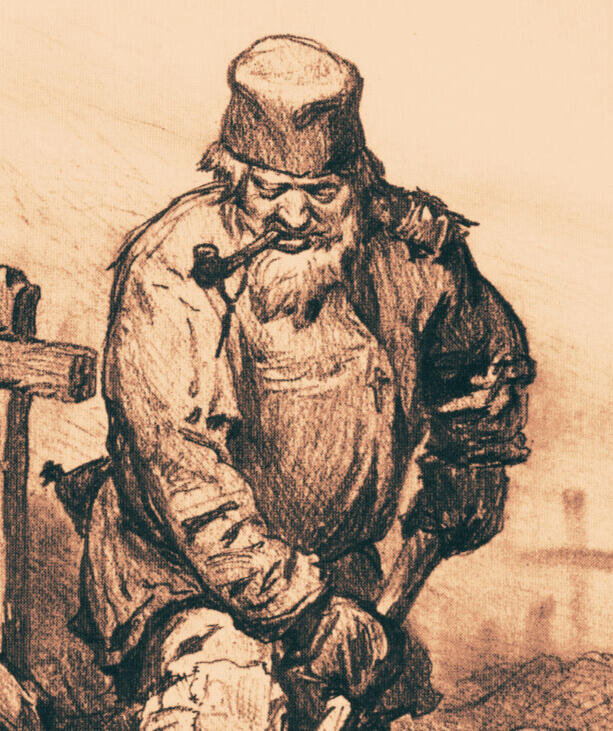
Jeppo Kärkiskjo had not once wept for those beneath his feet, but he had become a great observer of grief. At today’s funeral, he observed how Mrs. Puntasakjo bawled on her father’s shoulder. How tears dripped from the widow’s cheeks. He listened to wet-lipped wails, gasping sobs, and that tedious question repeated over and over again. “Why?”He had seen and heard it all before, and he judged it an adequate performance. That was, until, the priest-doctor waved him forward to lower the body of Vuuli Puntasakjo into the grave. At that moment, with all eyes cast downwards, the widow lifted the hem of her skirt. To preserve her embroidery from the grave soil, he thought at first. Yet, her act revealed stockingless ankles to all.Hunched over the dead man, Jeppo pretended to smooth the shroud that he might glut himself on the sight. The lady’s spotless flesh. Her ankles’ delicate proportion, no thicker than his wrists. When he stepped from the grave and back into the crowd, he began to watch her more closely.
“What will I do? What will I do?” Mrs. Puntasakjo groaned. Jeppo noticed she did not address her handkerchief or even her cold husband, swaddled at the bottom of the shallow pit, but the other mourners. She even swiveled her eyes, as lovely and round as waxed moons.“To whom shall I turn now?”The mourners stirred. Ears perked. Noses lifted, sniffing opportunity. Mrs. Puntasakjo’s question was honest and also proper, for none could deny her new vulnerability. But, Jeppo thought, her asking was not specifically appropriate to this time and place. She had all but announced her wish to throw off the widow’s shawl.Jeppo waited for the ceremony to end by his vine-clad cottage, a modest little home near the wall that commanded no attention so near the magnificence of St. Vattis’s tomb. He chewed the stump of his unlit pipe and he thought of Pajva Puntasakjo’s question, and the solace he might give. Then he asked himself a question of his own: Why should it not be me?Why should the widow not turn to Jeppo Kärkiskjo for comfort? Who knew better how to keep another safe?When the priest-doctor finished his prayers, Mrs. Puntasakjo pressed her fingers against the arm of one man after another, thanking each very sincerely for paying his respects, warming each with her smile and the flutter of her dewy lashes. And, with a question asked of himself and left unanswered, Jeppo asked himself another: Why should she not thank me?He acted impulsively then. As the mourners began to take their leave, rather than remain standing at the graveside, leaning upon his shovel as solemnly as a cavalryman upon his saber, he followed. The widow cast a final glance at her husband’s grave, and her eye alighted for an instant upon him.She was nearing the cemetery gate and Jeppo quickened his pace. He passed the widow’s stooped aunt who quashed clods of earth with her cane as though they were spiders. He passed the widow’s slouching cousin, who would have been as tall as the lintel if ever he stood up straight and who, though his cheeks were dry, appeared in that procession saddest of all. Jeppo passed the first fellow who had received Pajva Puntasakjo’s thanks, then another, and was near to her elbow when the priest-doctor’s hand reached out to seize his own. Rev. Miklaja leaned towards Jeppo, his eyebrows drawn together like two squirrels colliding. “Have you not received your fee, gravedigger?” the priest-doctor asked.Jeppo pulled his arm away and knew his face was darkening. “I have.”“Have you had problems, then, with—” and here the priest-doctor lowered his voice and patted his long curing-knife, “bogeys? Need you the strength of my prayers?”“I need not your prayers,” Jeppo said. By his tone, one might have imagined the priest-doctor offered to knot Jeppo’s neckcloth.“Hmm.” The priest-doctor momentarily glanced at St. Vattis’s tomb before he stepped backwards. He retreated towards the gate still facing Jeppo, as though to make sure the gravedigger stayed in place. “Then good day to you, sir.”The priest-doctor’s nod was so slight that Jeppo did not bother to return it. Besides, he was looking over the priest-doctor’s shoulder to see he had missed his chance. The widow Puntasakjo had already left his domain, braced on both sides by lithe and manicured men who none would call unhandsome. Neither man was her father.Jeppo waited until he could no longer hear the mourners chattering before he began to fill the grave. He picked up his shovel and threw dirt over the dead man’s face.He had known Vuuli Puntasakjo his whole life. Known him too well. When Jeppo was seven and Vuuli a young lout of fourteen, Vuuli had convinced him to splash water on a beehive. The resulting stings had earned Jeppo the nickname bee-kisser for the ring of welts that had circled his lips.When Jeppo was twelve, Vuuli had pulled down his trousers in Luukarokja Square during the Pantomime of Blossoms, just as the players were circling to make their collection. That had earned Jeppo the nickname worm-coin, for what he dangled above the plate.Then when Jeppo was twenty-nine—eight years before this day—when he was newly returned to Vattivoja to take up his father’s trade, Vuuli was not spare in his mockery. It was Vuuli who first named his condition when even Jeppo’s teachers had merely patted his back before the Academy’s doors closed behind him. It had been Vuuli who had stumbled drunkenly across the floor of the sourmilk shop to hang a brawny arm around Jeppo’s neck and loudly proclaim his old friend the could-have-been had returned broken-winged.Jeppo never spoke to Vuuli again after that day. Tried never to think of him. Not until six weeks earlier, when Jeppo heard a rumor that Vuuli had left the brickworks vomiting and that the spell lingered longer than regular milk fever. That was when Jeppo began to hope. He sought out news of his old adversary and was gladdened by every detail of Vuuli’s decline. He spent his mornings daydreaming over his porridge, imagining less his enemy’s suffering than the moment of his dissolution and final erasure, the moment Jeppo might stand alone over Vuuli’s open grave, shovel in hand.“Now you are in my keeping,” he said to the corpse at his feet. “Hark my laughter—ha-ha!—you limp and leaking sack of mud. For I shall fête your wife in private. I shall lay these hands on her hips!”Jeppo dropped the shovel. He walked the circuit of the high stone walls whose four sides were his frontiers. He ran his fingers over the phylactograms that were inscribed at waist level, those grooved glyphs he repainted with red ocher every equinox, and felt the potency humming through the stacked formulae so that the whole web was as taut as a zither string. The reverend was a fool to think any bogey could ever trouble him behind this line.The graveyard’s walls concealed his tiny khanate from all, save from two vantages. First, the iron bars of the cemetery gate looked westward onto the path that wound through the Tuuliwood, past the gristmill and then round another bend towards Vattivoja. Second, to the south the land rose and the trees thinned where Master Eksa kept a pasture. Sometimes Eksa’s po-faced girl walked the hilltop to gather cow patties for the hearth or to strike the heads from daisies with her rowan switch.He checked these sight lines. No one observed him.He entered his shed, fetched two wooden planks, and dragged them to the grave. Vuuli lay three feet down in his hole, but rather than fill the space with earth, Jeppo laid the planks atop the grave’s length. He then fetched an old canvas and placed it over the boards so that no dirt could fall through the cracks. Upon the canvas he laid two sheaves of hay that rose a foot higher. He covered these sheaves with yet another canvas that was so filthy that, from a distance, it resembled soil.At last he took up his shovel and covered the cloth with as little dirt as was necessary to create a false mound over the grave. The earth that should have filled Vuuli’s grave remained piled upon a sledge where Jeppo had shoveled it the day before. He pulled the sledge behind the caragana bushes that grew beside his cottage shed.The heavy sledge offered no challenge for him, for the rope he used to pull it was enchanted. It was his most precious possession. His first gift from Kuumasta, and the last freely given. With this rope, no matter the burden, no matter how stony or muddy the ground beneath the runners, he could pull loads of excess grave soil as easily as a horse pulling children across a frozen lake.Thus, when he returned to Vuuli’s graveside, his brow did not shine, nor did the muscles in his back or arms complain. He sucked on his pipe, the bowl glowing with every pull, and imagined the table Mrs. Puntasakjo might keep. He imagined how, at the end of day, she might slip off her sabots to wash those stockingless feet.A cloth pulled over a high arch. A reddened heel. A basin and splayed toes beneath clear water.He puffed on the pipe and studied the grave before him.“Here lies Vuuli Puntasakjo. For now. See you soon, old friend.”
Mountain Fast
Chapter 1
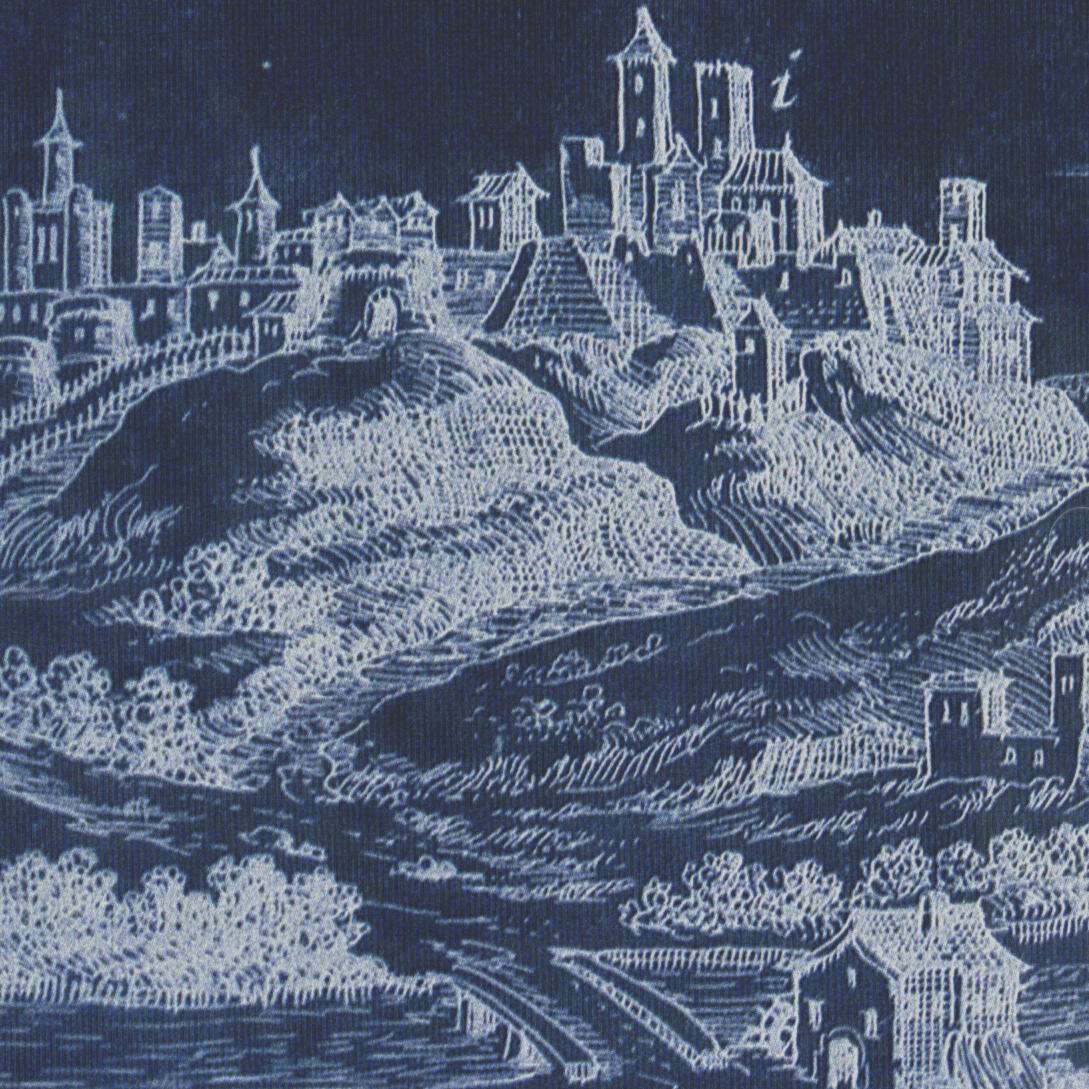
Pál’s knuckles rested on the table. Dry blood filled their creases and flecked his swollen lip. A fissure in the wood held his attention. Like a convict marching to the stocks, he would not look at me. Nor would my brother-in-law answer. I tried again. “Did you know this lad? Was it one or many?”He stared down with such force his pupils bobbed beneath the lashes. He did not move his eyes from that dark little cleft.“Perhaps you were simply misunderstood,” I said. “It has happened to me. You must be mindful of others and how they take your meaning.”He slid a crumb beneath his thumb.“At your age, boys turn savage,” I said. “Some men never outgrow this.”Pál flicked his head. I could not tell if he meant to shake it or to dislodge a hair from his brow. I waited for him to say more, to tell me I was wrong. To tell me that there was good reason for this latest scrap. That it was not senseless and that he was no ruffian. For a time we sat in silence, just the two of us, alone as we had been these last months. No stew bubbled on the fire. Half a week’s dirty crockery crowded the table about our elbows.Soon I would have to go. I tried one last time. “Did you know this boy? Tell me his name and I will make this right.”Pál’s voice broke, “I did not know him.”I leaned toward him and reached for his wrist. He shifted his arm before I could take it.“A stranger did this to you? Why would he do that?”He flashed his eyes at me. Despite Pál’s new height and the size of his hands, I thought that if I continued to prod, tears might flow. I could not decide if this was for the best. He had come to me an orphan but he was well down the road to manhood. How far, I could not tell, nor why he so easily strayed.“You owe him nothing,” I said. “You must not protect him. Tell me his name and I will speak to his father.”“His father?”“Yes,” I said. “I will not stand for this brute treating you so.”“You have no grounds to speak. Not on my behalf.”He pulled his arms across his chest and found a tower of clutter on which to rest his gaze. There was no chance of loosening that tongue now.I pushed back from the table and stood. I studied Pál for a long moment. He did not look up. He had Annaka’s stubbornness and of late he had developed his sister’s talent for pique. It did not matter if I told him to stay indoors today to tend the fire. He would not listen and I could not blame him if he left. This cottage had become unbearable since we lost her.“Terézia will be by later with our supper,” I said.“My great luck.”“You are in no position to complain.”“Even a beggar would protest eating her tripe.” He turned those fierce eyes towards me. This time he did not look away.“Only those new to their vocation,” I said.“I will not count slop among my blessings.”“Terézia has only treated you well. You must never repeat such nonsense outside these walls.”“Else what?”I let his childish defiance hang, awaiting a flush of shame. But there was only anger coloring those cheeks. His thrust-out chin did not lower an inch.“It frightens me,” I said, “your ignorance of how far a man might fall.”His smile broadened. I left him grinning like a fiend.I saddled Fejes and began the short ride into town. Soon I passed through the gates and was climbing the plaster and timber corridors of Veszprém’s narrow streets. My destination was the palace upon Castle Hill, where my master, Bishop Albert Vetési, would hand me a letter to deliver. I would depart at dawn, and if His Excellency’s correspondent lived in Sopron, I would return in five days. If he had written to Székesfehérvár, as little as one. If Debrecen though, eleven or twelve nights might pass before I was back home again.The townsfolk squeezed past my horse and jostled my knees. I paid them no mind. Instead I studied the sky, searching for the cause of this unseasonable warmth. The mellow autumn light easily rolled back the chill of long nights, and the quiet breeze whispered no word of rain or snow. Ideal weather for travel. Good fortune for the days ahead, but at that moment I felt no gratitude.A child darted in front of me, bringing Fejes up short. The boy carried a roll of leather in the crook of his arm. He gave no backward glance at me, and I watched as he rushed beneath the awning of a cobbler who stitched hide cutouts into useful forms. The cobbler marked me and bowed his face, and at his word the boy turned and shouted an apology.A little apprentice. Five years younger than Pál, and already more advanced in his career.I had never had such thoughts before my wife died. No one had fixed my future, so I suppose I had expected Pál would find his own way. Now I knew I had erred. I was losing faith that he might find success through chance. He was not fit for a life of accident. Annaka was no longer there to care for him when I was on the road. In her absence, he had taken to tramping through town, seeking out his new friends who passed their shiftless days talking of bold futures, only to pester townsfolk for coin enough for wine.At the gate to Castle Hill a grizzled old-timer leaned against the wall next to a cold brazier. He appeared to be sleeping on his feet, but the sound of Fejes’s clopping hooves opened his eyes a crack. This veteran was named Jakab, the least valuable member of the king’s Black Army. He had arrived the past summer, and I gathered he was sent to Veszprém as a sort of exile. It was said he was as vicious as a weasel in close-quarters, but since arriving he had only distinguished himself by running dice games that ended in hard words. That, and his penchant for drink. He was suffering its after-sickness now, I guessed, and had no doubt been assigned this standing post in punishment.Recognition took and sleep lifted from his eyes though he made no move to right himself. His watchful look lacked any deference or hint of amity. I commanded none of the former, for it was not my rank but only my role as messenger that set me ahorse. As for the latter, I knew him only by his reputation, and perhaps he divined from my own expression what I thought of him. And perhaps he only knew me by my reputation, or more correctly my wife’s, for the story of her life and death was well known throughout the town. In the months since, strangers sometimes crossed themselves when they thought my back was turned.“Has the bishop’s visitor from Croatia departed?” I asked.The veteran stared at me. A vague hostility, like that of a dog whose boundary marking had been crossed, kindled in his eye.“Has he?” I repeated.“How the hell should I know?”I had half a mind to dismount and box the man’s ears. That would be a mistake, not least because I owed my calluses to handling tack, where his were earned drilling that he might better kill.Fejes, knowing what was best for me, stepped forward. As I passed, Jakab pressed a thumb to one nostril and fired the other like a cannon. He closed his eyes again.My horse led me to the stable. I left her there with the stable boys before crossing the yard’s pavement on foot. From the glowing ovens wafted the smell of the evening’s bread. In the palace, the vestibule blazed with candles illuminating a sainted heaven upon its ceiling.The bishop’s apartment was closed, so I set down my messenger satchel to wait, wondering if the maid Sára might wander by to wish me a good day. By some twist, this maid had come up in my last conversation with Terézia, and my sister was so full of details about the young widow I wondered if she had come prepared.My sister had said that, like me, Sára was alone. She was still young, had kept her figure, as I had no doubt remarked, and her two little girls were the sweetest creatures. And strong. Both had stayed dry-eyed the day their papa went to the churchyard as they held up their mother’s arms. Sára came from farmers attached to one of the bishop’s manors, simple folk who had not hesitated to take her in when her husband was lost. Word was her grieving was near its end and she was looking to move on.Perhaps this maid and my sister colluded. All I knew was that Sára always smiled when I spoke to her, showing the tips of her teeth, and that she looked at the floor when she curtsied in a way I found most charming. But Sára did not come along to dust the corridor’s statuary this day, and I waited alone, idly twisting my wife’s silver betrothal ring about my finger. I exchanged one-word greetings with the clerical secretaries who brushed past, and adjusted my footing as my knees began to ache. I had done nothing wrong, but like Jakab, I was left standing.The memory of the miserable old dog chased away all thoughts of Sára’s slender wrists. Suddenly, and with a sinking heart, I saw how Pál might turn out.The bishop’s door opened. Out stepped a big man who boomed his farewell, the Adriatic still sparkling in his eyes. The Croatian ambassador glanced me over, noticed my messenger’s bag, then returned his gaze to study my face. I had become accustomed to this sort of lingering appraisal. He, like so many far and wide, had heard the story of the messenger’s doomed wife.Pál, I realized, must encounter this same look every day.“András. Enter.”The sun threw fishnet shadows through the leaded glass. The bishop sat alone at his table, poised over rows of letters and charters that covered the surface like overlapping scales. Upon these records he had laid a bounded volume, his lectern forgotten in the corner. I recognized the book as a work of Greek statecraft. He had had me fetch it from the Universitas Istropolitana in Pozsony that summer. Despite the warmth of the light splashing across his broad shoulders, His Excellency wore a fine velvet cape, as red as ripe cherry, for later that day he would preside at the wedding of one of the Essegváry heirs.He waved me forward without looking up from the tome. His finger slid down the parchment and turned the leaf. He contemplated the new page for a moment before he placed a string, closed the volume and set it aside.“You travel to Buda.”“Yes, Your Excellency.” Four days.“I would that you hand my missive to the chancellor directly.”“Understood, my lord.”The bishop withdrew two sheets from a leather portfolio and reviewed them. I waited with my hands behind my back as he scratched out a postscript. Needless to say, Albert Vetési was one of the greatest men in the realm. He was once the land’s chief justice. He led the king’s delegation to Naples. My place as one of his messengers was secure, but Annaka always wanted me to make better use of my position. I had always resisted, until I surprised myself this day by speaking out of turn.“I have a brother-in-law, my lord. A boy yet, really more of a son.”Vetési’s eyelids fluttered as he registered that I had broken my silence. After writing another line, he set aside his quill and looked up from his desk. “Yes,” he said. “You spoke of him once before.”Despite my twelve years of service, I squirmed beneath his gaze. The gold upon his fingers, the precious stones at his neck, did not hint at his authority. Albert Vetési had met the Pope in Rome. He owned this city. The county was his.I was mortified to have broached the matter with my master. It was not my nature to preconceive the path ahead, I just followed it. It had been she who had pestered me to raise Pál’s career with the bishop. She had harried me since he was eleven. It had been the great quarrel of our life together. With Annaka’s death, I had surely prevailed, yet here I was suddenly capitulating.It was the latest instance of a strange new habit of mine, as if some rebellious part of me thought to make up for Annaka’s absence by acquiring her concerns. I often found myself thinking of tasks outside my domain, matters I had never paused to consider—the washing, grinding corn, batting cobwebs down from between the rafters—chores I now paid a neighbor to perform and towards which I felt a new and vague disdain. I found myself thinking, too, of grander matters—the movements of the Black Army from front to front, whether the revolts in Erdély would spread west, the rumored estrangement between the Archbishop of Esztergom and the king. The affairs of the great, upon which few as powerless as she wasted a thought. Even I did not, though as His Excellency’s vehicle, I often passed through the thick of it. I had never cared.The bishop watched me closely. He showed great patience, even interest, I would say. I had been told that he spoke to Annaka privately in her cell the day she died. Perhaps she had asked him to look after Pál.No. The bishop had not even intervened to save her. Yet they had spoken, about what I did not know. It was a question I had tried to leave unanswered for it sickened me to dwell upon it.“He is near enough a man,” I found myself saying. “I have no proper trade to pass on to him. It is time he found his place.”The bishop returned his attention to his papers. Instead of resuming his letter, he moved the leaf aside and replaced it with a fresh page. As he wrote, he said, “They need men at Kuszkol. A fortress in Trencsén County. It is comparatively safe. Send the boy to the garrison with my recommendation. The marshal will look after him.”Without a further word I had secured Pál his future. Two hundred miles from home.
Rare Specimen and Other Stories
Storm Surge
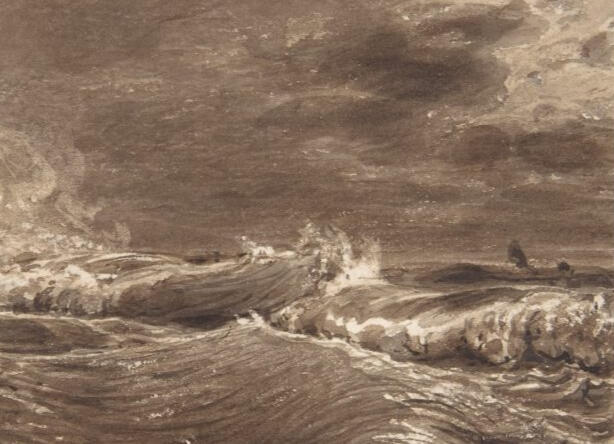
Kaatso Kamatuum staggered from the crashing sea, one arm dangling, his lips stitched by enchanted string to keep dammed his seething words. He had come ashore near a nameless fishing village at the foot of Mount Tsamutsut. He refused to contemplate the odds of reaching its summit before his jailer’s arrival.Dogs howled. A shutter opened and a lantern shone. One of the villagers stirred, awoken, no doubt, by the underwater implosion that followed the dismissal of his nereidic chariot. He set his back against a boulder that leaned out of the sand and rued his weakness. Had he full command of his vocabularies, he would have stridden to the mountain path without paying the least heed to the fisherfolk. He would not hear their questions, and should they attempt to bar him, he would turn their clubs to charcoal with a word.But he was muted and he was maimed. The only genii that remained faithful were those that haunted his senses. Thus could he still distinguish the millions of drops pattering the sand, the discordant song of long-sunk Syokantya in the ocean boom, and from thirty yards’ distance, the opening of a shanty door. He heard the woman grate her teeth against the night wind, the creak of her tread on the steps, the clink of her lantern, the groan of her shack’s foundation posts, the charged crackle between the drops that foretold—Kaatso blinked grit from his eyelashes. He moved his head, confused to find he lay face down upon the strand. A lantern hung near his face, casting long shadows across the rain-pocked sand.“The lightning has struck you down,” came the woman’s voice. “Stranger, why were you standing so near the thunderstone?”Her fingers slid beneath his good arm, its flesh now raw and scorched. Either she ignored his grunt or could not hear it through the hammering rain. Kaatso rolled onto his back and raised a hand to shield his eyes. Her breath caught in her throat. “What happened to you?” she whispered.Though Kaatso knew she meant his disfigurement, he pondered the same question. Had he become so careless to lean against a thunderstone? They were sometimes used as sentries in these islands. He saw now the telltale tendrils of vitrified sand near the boulder’s base. He was growing dangerously absent-minded in his old age.“Come,” she said. “My home is modest but dry.” Kaatso found it difficult to resist her pull. He rose and glanced at her cowled face. Some thirty years old, he guessed, the same age as his great-granddaughter. A spray of wet hair pasted to her high-boned cheek. She raised a finger as though she meant to touch his lips. He swatted her hand away.“But how come you to this shore? Are you castaway?” He pointed to the mountain’s peak, where lay secreted the Oaetheric Knife that would unleash his lips. “Are you a pilgrim, come to pray at Tsamutsut’s shrine?”Not pray, Kaatso thought, but to prize stones from the altar. He took a shaky step toward the mountain path. He had little time.“No—you are a conjurer,” she said, awe twining through her voice like smoke on the wind. “One who commands the genii.”The Sage Kamatuum halted. In a great capital, like Kinkinkan or Lyalunn, his bearing would be recognized immediately. But here? Among the squid-catchers and kelp-collectors in the middle of the Utyosszak Sea? He studied her face anew. The fine lines of her brow. The width of her eyes and corners of her mouth. Kaatso saw concern, he saw fear, but he saw no deception. He supposed that, given his grotesque and sudden appearance, she could not but conclude otherwise.His attention was drawn to an emerald flash over her shoulder, far off on the black water. His adversary had arrived. A moment later he felt a rumble through the sand.The woman gasped. Kaatso was already lurching toward the mountain path. The quartz plank bounding its first step was regarded locally as a threshold. By the custom of these islands, one could not cross it without completing the trek to the summit lest one incur the ire of the mountain’s genius. Kaatso had no intention of turning back, but not out of fear of some petty godling. The fifthform named Yasussyil had arrived. The woman tugged at his sleeve. “I beg you, wait!” she cried as he neared the boundary stone. “What dread light rides the water? Are our boats at risk? Our lives?”He wrenched free and crossed over the stone, leaving her to her lot. The path rose into the benighted forest of laurel and blowing pine. An inconceivable climb, were it not for his uncanny eyesight, for he saw in painful detail the challenge ahead. Rainwater streamed down the trail. Where the pitch was steepest, he would need wade against a torrent. How he would scramble over tree roots and windblown debris without the use of both hands, he would not consider. He lowered his head and loped forward.Within twenty steps, he had fallen hard on his knee. After another thirty, he had slipped and cracked his chin on a stone. Rain pelted his face. His shoulder throbbed, broken during his flight across the ocean. He pushed on, plumbing his deepest wells to deny pain and doubt alike.When the fifthforms had captured him, they told him to expect at least a decade of torture before they would let him die. “Only ten years, O Derelict One, then you will have your sleep.” He was too dangerous to ever let speak again, and so they had planned to extract his hoard of secrets through scrupulous observation of his contorting face and limbs. Kaatso owed his life to his old ally Osyaan, who had rescued him and lent him his nereids to effect an escape. He was now in debt to the hoary Lord of the Froth. Not that he trusted Osyaan. All the factions coveted the Oaetheric Knife, said to have the power to split the indivisible. His need was more prosaic; it alone could slice the stitches that sealed his mouth.He stumbled forward, clutching at razor grass that drew blood from his palm and bruising his knees on mud-smeared rock. After falling backward and almost cracking open his skull, he rolled onto his stomach to catch his breath. A wiser man would stop here, he thought. Give up. His inability to surrender anything to anybody was his greatest moral defect, he knew. But perhaps now he had finally endured enough. Perhaps he could finally muster the courage to let himself die, to join his wife who had been gone for so many long and lonely decades. If only he had found an heir. His children and grandchildren grew up longing for his power, but they understood nothing of his true work. This world was so rich in wonders, but one must learn to hear them, to truly listen, before they might be mastered. And no one had heard as much as he. No one had ever mastered five of the six languages of the gods. Those sulking children barely had the commitment to learn two—and they wondered why he grew incensed when they complained!Strong hands touched his shoulders. The woman had crossed the boundary stone, hitching her destiny to his. “Stranger, I beg you,” she said, “the light on the water—can you stop it?” He let her take his hand, then take his weight as he rose on unsteady legs. He pointed up the path.“You will rouse the mountain’s genius to defend us,” she said. “I pray it might be so! I will support you as far as I can.”She took his elbow and began to pull him forward. She had chosen to set down her little fire next to his, her little flicker next to his great blaze. How many such candleflames had been snuffed when he leaned into the headwinds? He had never tallied, for on the fields upon which he battled, such lives were never reckoned. She would likely die, but he had no time for pity. He had not coerced her. He had forfeited his own life to this path long ago, and was resigned to its grisly end.Insignificant though she was, he was soon grateful for her presence. The woman was surefooted and he let her drag him upward. After endless buckled steps and switchbacks, a break in the screen of trees permitted a view of the sea. “We are half way,” she said. He forbade himself to groan.Stooping as he caught his breath, he pressed his fingers to the ground that he might hear the report of the earth below. The earth knew its future, and in the way the grains parted around his fingerprints, he deciphered how the topsoil gossiped of impending anguish. A great concussion would soon tear this ground. A great—Roar.A mile from shore, a jungle-tinted funnel rose from the sea, an inverted whirlpool from whose cone rose the fifthform monster, Yasussyil. Its body curled forward, segmented like a scorpion’s tail. But instead of a stinger, a great-helmeted head bobbed down at the end, death gleaming from its visor, the night reflecting from its cyst-like eyes. In each of its hundred and forty-four hands, it wielded a gaff hook tipped in mother-of-thorn, the weapon of choice in the malachite halls of Lyuuralsuk, whence Kaatso had escaped.A bolt of lightning split the night, wreathing the thunderstone in a net of white fire. The stone might provide the delay he needed. He pushed the woman to move, but she stood immobile at the horrific sight. The flash had illuminated the scurrying, hapless figures of villagers below.He shoved her again and shouted a wordless command through his sutures. At last she leapt into motion, charging forward with the speed of a plains hunter, towing him like a child. He slipped time and again, and always she hauled him to his feet and pulled him on. He would never survive this ascent without this woman, he realized. Her strength, her swiftness, her endurance—either she was a conjurer, too, or she had received a conjurer’s patronage.Kaatso passed the climb in a trance of pain. He spared no thought to the villagers who sought refuge on the mountain path, the one place they could be sure to find danger. He ignored the leaves trembling fearfully all about them, for the trees had finally caught word of the impending catastrophe through their roots. Instead he contemplated the strange workings of fate that had brought him to this place, and this woman to his aid. And he indulged himself by imagining what it might be like to peevishly choose her—this stranger—as his heir. If they should both live out the night, he decided he would ask her. He wondered whether she would have the farsightedness to understand his offer.When they had made it three-quarters of the way, another vantage opened and Kaatso saw that his nemesis had come ashore as the sentry stone called down bolt upon bolt from the churning sky. Yasussyil used its dozens of limbs to fend against the stone. Some whipped sand into the air to deflect the lightning. Others dug near the stone’s base, seeking to undermine it. Now that the monster was exposed, one could see that it had no proper end to it. Yasussyil’s lower segments rolled back onto themselves in a tight spiral from which its limbs jut out in exploding sheaves. Its lower arms worked their gaffs constantly to move the creature, as it hooked, poked and pushed off from the ground in a heaving dance, perpetually rising and falling on forty stilts. The fifthform walked atop chaos itself.Kaatso ran, huffing bitter air that reeked of lightning. At length, he heard Yasussyil’s keening scream when, inevitably, it defeated the thunderstone. He heard the villagers’ shouts and a threshing sound that took the sage some moments to recognize as the behemoth attacking the forest. Kaatso listened to the sound of shredding leaves and snapping twigs as Yasussyil eschewed the mountain path and began its ascent directly up the mountainside. It hauled itself over top of the canopy, galloping atop its confusion of furious hooks.The monster progressed with sickening speed, but Kaatso and the woman reached the rocky summit first. Here rose the shrine to the genius of Mount Tsamutsut, an open-air alcove of weathered stone whose cavorting reliefs were obscured by velvety moss and wind-whipped ferns. Kaatso tripped up the steps and collapsed before the round altar.“Hurry!” hissed his savior, who stood flexing her fingers, staring back at the forest. She need not have said anything, for he heard far better than she that Yasussyil was almost upon them, grinding through the treetops on its vertical climb. He crawled forward and ran his fingers along the ancient mortar of the altar stones. There was a compartment within, for this altar was a treasury that had been sealed for centuries. He alone could open the lock, for he alone possessed the key—the genii dwelling in his fingertips were mated to those in the stone. He stroked the mortar carefully, like a blind man, for this lock had melted the bones of more than one thief. In the end, the genii themselves sped his fingers into position as their ache for reunion suffused him. But before he let the genii of his good hand re-consummate their neglected marriage, he rose his deadweight arm into position, placing precisely its fingers, ignoring the woman’s shouts, paying no mind to the agony of his broken shoulder.At last the genii touched, and through flesh and mortar, were reunited. After everything—the weeks of deprivation, the devastating betrayals, his unimaginable exhaustion—it was this reunion that almost overcame Kaatso Kamatuum. Not the woman who shook him by the neck demanding he work faster, nor Yasussyil, who shook the forest with its wails, but this love measured in fleeting moments of contact between eons of absence. Had the genii had their way, he would have kept kneeling as they touched until his heart stopped. But Kaatso’s will was stronger. He closed his inner ear to their laments and pulled the stone free of its slot as smoothly as if it slid on a skid of grease.Revealed was the dusty compartment from which the bronze blade of the Oaetheric Knife gleamed darkly. He squinted at the artifact, at the unnatural clarity where the air itself seemed to bleed lightless haloes along its edge. The knife had been crafted by Tyo, the first queen of the fourthforms, when her kind had conquered the earth ten millennia earlier. Even Kaatso, who knew too much to believe anything in this world was holy, hesitated before it.It was the woman who acted first, shouldering him aside to seize its grip. She turned just as the first of Yasussyil’s gaffs clattered outside of the shrine.Kaatso turned. The monster rose as tall as the mountain pines. It spread wide its arms like a colossal centipede, one wielding blades enough to reduce a war galley to splinters. The sage was accustomed to the sight of the obscenity, but judging by how she let the Knife of Tyo dip, he could see the woman quailed.Kaatso leapt for her legs—she needed to free his lips! But she danced out of his embrace. He knew then he would not make her understand in time. And so, as she stepped out of the shrine, and he slipped and landed hard on its floor, he knew this was the end. He had grown as old as he would, he had known his last moments of freedom. The girl would be torn asunder, and Yasussyil would bear him back to Lyuuralsuk to resume his tortures, its honor restored, if not improved for having retrieved the artifact.Words, scornful words like retching spewed from his enemy’s iron helm. “Such euphory! To teach the sage defeat!”Kaatso glared. During his captivity, the fifthforms’ gloating had been almost as intolerable as their bloodier ministrations.The great head drooped down, reeking malice. Kaatso rose his face, eyes burning with indignation. And the woman—all but forgotten—attacked.She had already darted through the monster’s stilts like a swallow plummeting between tangled branches before he or the fifthform understood her gambit. Kaatso remarked the leaden brilliance of the Oaetheric Knife’s passage just as Yasussyil’s scream knocked the breath from his lungs.The thing wrung its vermicular body around, shambling sidewise, almost collapsing into the sudden void where three of its arms had been shorn off. It listed, voicing its ear-splitting protests, as Kaatso glimpsed the woman below its great bulk, sweeping her hand in a fan, her fingers leaving weird troughs in the air as though she clawed through clay.
There was no question, the woman was a conjurer! Kaatso struggled to his knees. They might have a chance, after all. He was enfeebled, but perhaps he could give her time. But how? As he wracked his brain, the monster reared up on its bottommost arms and flopped down on the woman like a breaching whale. Unless she had ensorcelled bones, she was dead.Yasussyil rose on seven-score canes. Kaatso strained his hearing, and through the wind and the creature’s low whine, he picked out the woman’s desperate whimper from where she lay broken on the ground. She begged for the mountain’s protection.Idiot! Even if the genius agreed to intercede, the god of Tsamutsut was no match for the fifthform. Yasussyil was a Veteran of Araatdar—the fiend could bat the godling aside like a lace curtain. Not that the genius loci would intervene. Should they live through this night, Kaatso’s first lesson to his new apprentice would be the terms of the Interordinal Compact.He had to move. He cast about. His hand alighted upon the genii-infused stone from the altar’s cache. He lobbed it at the monster.As a booby-trap, the stone was powerful enough to incinerate at least a dozen of the fifthform’s limbs. But as a missile, it was little more effective than an urchin’s pebble lodged against a phalanx. The rock bounced harmlessly from the glistening carapace.The fifthform responded by lashing a blade hindwards. Kaatso jerked away in time to save his sight, but he lost the tip of his nose.Pain dazzled. Blood spurted. He clamped his fingers uselessly over the red well as he began to feel the first septic effects of the poison in the mother-of-thorn.Yasussyil turned on its clacking gaffs and stretched to its full height. Instead of returning Kaatso to his prison, the creature was going to crush him, too. The noxious voice disgorged “Let the extollers proclaim it was I who made dust of famed Kamatuum!”The adversaries glared at one another. Again, the woman was forgotten.She heaved the blade from where she lay on the stony ground. She did so with little more strength than had Kaatso his stone. The difference was she cast the Oaetheric Knife, and the diluvial queen had crafted her blade to strike ever true.The knife passed through the fifthform’s mast-width body like a heron’s bill through lakewater, severing the monster’s spine on its flight.One hundred and forty-one arms suddenly let go their gaffs. The tower of flesh turned slack. Kaatso rolled aside just as the great helm crashed down on the altar with a soppy clang.The sage gulped night air. He was alive. Somehow victorious. Soon to be free.His eye wandered over the carcass. More valuable than any whale to an astute harvester. His eye turned to the forest. He wondered why the trees still quaked.The woman moaned as she got to her feet. He listened as she shuffled to where he guessed the knife had landed. He listened to her approach.It was not he who was victorious, it was she. This was no fishwife, this one. He sat up as she shambled forward.She held the blade up to her face, turning it back and forth, studying how it shed haloes from its darkling sheen. Disheveled and limping, she stopped before him. She looked down and smirked.In the peculiar nimbuses that flared like lenses about her hand, the glamours concealing her true face were laid bare. Too late, he saw this stranger was none other than his great-granddaughter, Kaalhakut Kamatuum. Only the long habit of self-preservation moved his hand to catch her wrist when the knife came plunging down.“You see it is me,” she spit. “Your unmaker, your own blood! You always said I lacked the temperament to earn your power. What think you of my temper now, old man?”The answer tolled through Kaatso’s tissues like a fog bell, bringing him back to himself. Simple despair is what he felt. Despair, that she could possibly think wielding the blades of heroes could compare to speaking in their tongues.The knife hung a hand’s-breadth from his eye. It was only a matter of time before she overpowered him. Still, he resisted, until both his and her arms juddered, until he felt light-headed from the loss of blood. Only when he felt the poison’s sickness enter his fingers did he twist aside and let the knife dive past him. It struck the floor of Tsamutsut’s shrine, passing through the flagstone as through silk, finding the peak’s grain to send a fissure a thousand feet deep, cleaving the mountain in two.The ground gave way. Kaalhakut’s mouth rounded as she snatched at him for purchase, but it was he who seized again her wrist. When the mountainside fell, dooming the village and the quivering forest; when the rockslide began to swallow him, cracking his ribs and mashing his shins to pulp, still he gripped his great-granddaughter. He bent his head forward and permitted himself a smile even as the earth consumed this child, as terror rolled back her eyes to their whites, for in the moment before silence could descend he kissed the blade, he parted his lips and at long last, he loosed his beloved words.